



Nickelosaurus skull fossil
Nicrosaurus is a genus of sauropods in the order Ceratopsiformes. Their appearance and lifestyle may resemble crocodiles, but they are not closely related to crocodiles and are the result of parallel evolution. The main difference between Nicosaurus and crocodiles lies in the position of their nostrils. Nicosaurus' nostrils are located on the forehead, while crocodiles' nostrils are located at the end of their mouth and nose. It is a herbivorous dinosaur.

Fossil of the upper half skull of the swollen dragon
The swollen headed dragon is a member of the thick headed dragon family in the order Ornithischia of the class Sauropods. The swollen headed dragon, also known as the thick headed dragon, has a thick bone plate on its head, which can reach a thickness of over 20 centimeters, and is raised high like a tumor. The body length is 4-6 meters and the weight is 0.5-4 tons. The area around the head and nose tip are also covered with small bone tumors, and some have large and sharp spines behind the head. Living in the late Cretaceous period, mainly distributed in North America, inhabiting plains, deserts, and other environments. Sexually inclined to live in groups, males fight in the form of "heads", with the winner being the leader of the entire group and occupying the female dinosaur. A herbivorous dinosaur that feeds on fruits, leaves, and other food.

Fossil of the skull of the Pterosaurus rex
The Pterosaur is a member of the Hadrosauridae family in the order Ornithischia, also known as the Pterosaur. The most obvious feature is the crown extending from the head, which is rod-shaped and longer than other crowned dinosaurs. There is a thin tube in the crown of the head that makes a sound when air passes by, and the secondary comb dragon uses it for "conversation". The forelimbs of the Pterodactylus can support its body, swim, and wade through water. Living in the late Cretaceous period, this organism was discovered in North America and lived along inland waterways. Eating plants, the habitat is home to many evergreen trees, ferns, and a small number of flowering plants. Collective living, with a keen sense of hearing and smell, will use a headband to sound an alarm signal when danger is detected.

Skull fossil of swollen dragon
The swollen headed dragon is a member of the thick headed dragon family in the order Ornithischia of the class Sauropods. The swollen headed dragon, also known as the thick headed dragon, has a thick bone plate on its head, which can reach a thickness of over 20 centimeters, and is raised high like a tumor. The body length is 4-6 meters and the weight is 0.5-4 tons. The area around the head and nose tip are also covered with small bone tumors, and some have large and sharp spines behind the head. Living in the late Cretaceous period, mainly distributed in North America, inhabiting plains, deserts, and other environments. Sexually inclined to live in groups, males fight in the form of "heads", with the winner being the leader of the entire group and occupying the female dinosaur. A herbivorous dinosaur that feeds on fruits, leaves, and other food.

Fossil skull of a loving mother dragon
Maiasaura, due to its habit of living in groups and building nests in groups, dinosaur experts have been able to discover many fossils of adult and juvenile Maiasaura and their eggs from its nests, which has given people an understanding of Maiasaura's living habits, the process of nurturing and growing its children, and other aspects. The face of the loving mother dragon looks like the face of a duck. It doesn't have teeth in its beak, but there are teeth on both sides of its mouth. The Little Mother Dragon is 30 centimeters long. The front legs of the loving mother dragon are shorter than the back legs. They have a long tail. The loving mother dragon walks on four legs and runs on two legs, and they run very fast.

Fossil skull of fan crowned swan dragon
The Fanguan Swan Dragon is a member of the subfamily Lycosaurinae in the duck billed dinosaur family. Fossils were discovered in the Chagayan Formation near Kundur, Amur Oblast, Russian Far East, dating back to the middle or late Maastrichtian stage of the Late Cretaceous period. Like other hadrosaurids, the fancrown swan dragon is a herbivorous dinosaur that can walk on two or four legs, has a complex skull, can perform chewing like grinding actions, and has hundreds of constantly growing and replacing teeth. The tall, wide, hollow crown decoration of the fancrown swan dragon, which includes a nasal tube inside, may be used as a visual recognition object or auditory speaker.

Popular Models
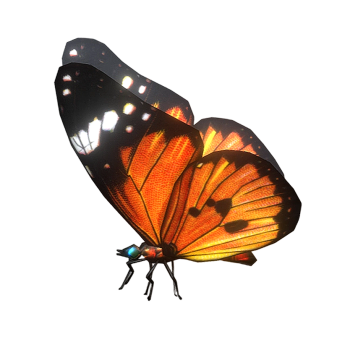
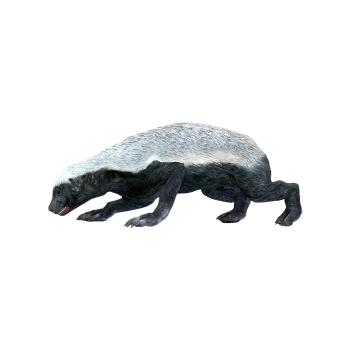
Honey Badger (3D animated model)
192 View
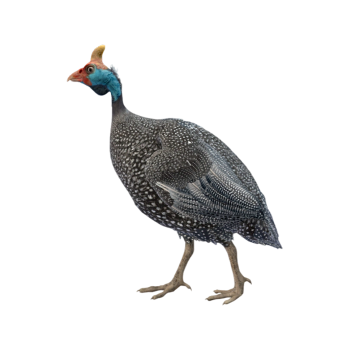
Guinea fowl (3D animated model)
163 View
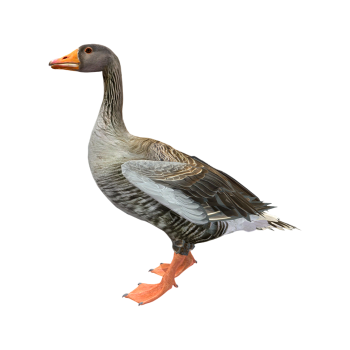
Wild Goose (3D animated model)
185 View
Red Fox (3D animated model)
153 View
Random Model

Musashino Six Screens
757 View
Christmas star shaped ornament
932 View

British Rail 125 Executive Express
811 View


Antique telephone in the twenties
590 View
Richter Family Tombstone
845 View

Sony Ericsson phones
730 View

Henghe crocodile specimen
814 View

Serrated spade worm
652 View